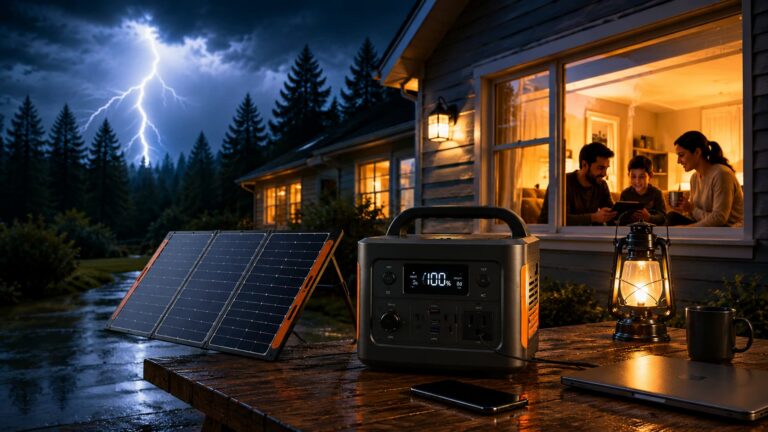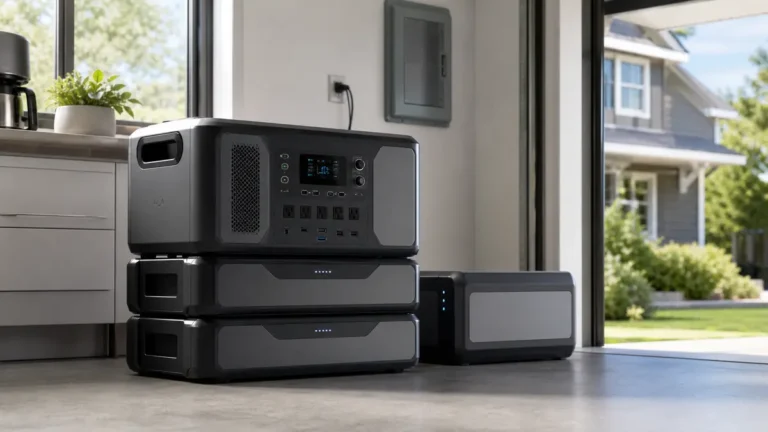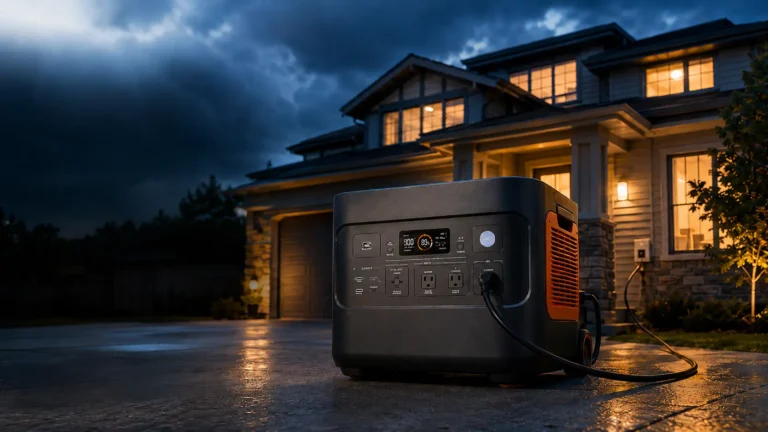

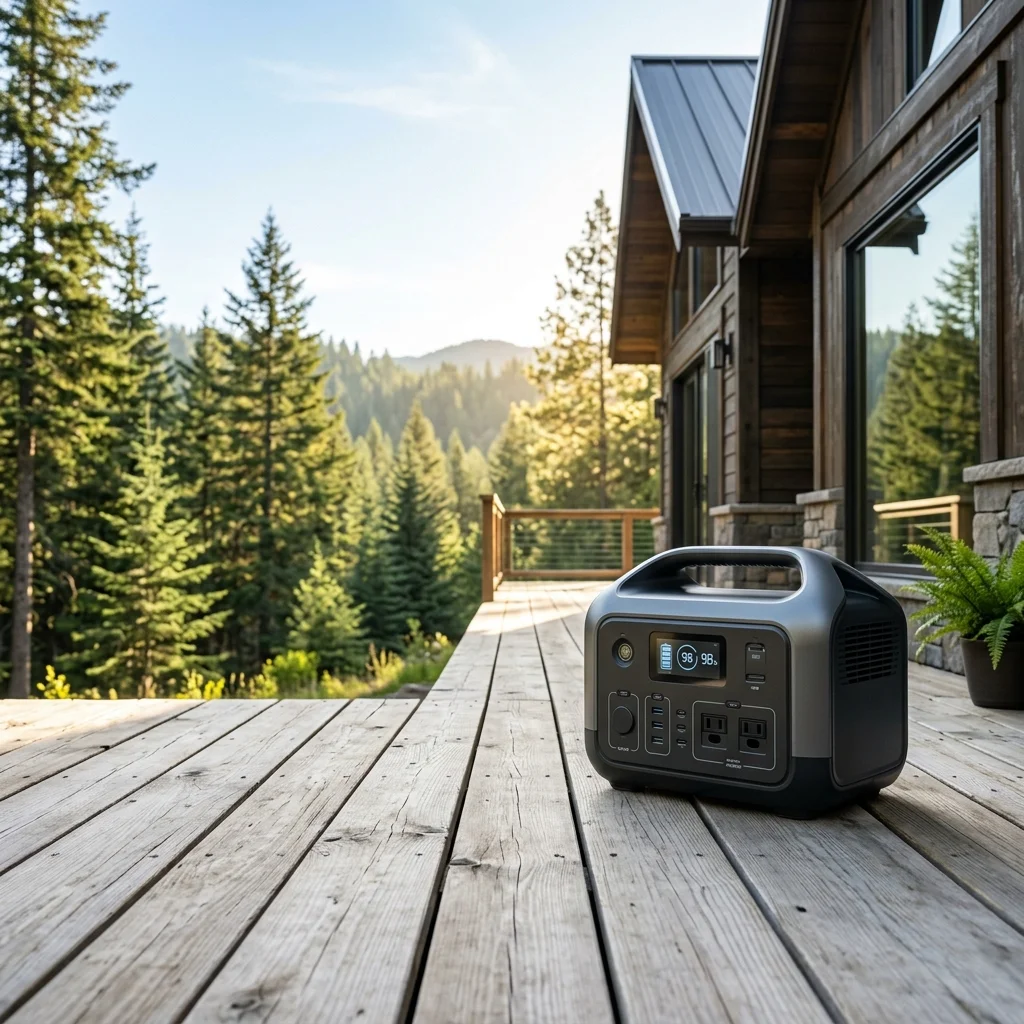

The best home backup power station for most homeowners is the one that matches their real outage needs, with the EcoFlow DELTA Pro Ultra leading for whole-home backup and the Jackery Explorer 5000 Plus offering the best plug-and-play experience.
Power outages are no longer rare events. Storms, grid instability, wildfires, and planned blackouts are pushing more homeowners to look for reliable backup power. The problem is that choosing between the best home backup power stations can quickly become confusing. Capacity, output, solar charging, expansion batteries, transfer switch compatibility, and price all matter.
This guide ranks the best home backup power stations in 2026 based on home outage use, essential appliance support, expandability, ease of use, and overall value.
If you want quiet, battery-based emergency power without relying on a gas generator, this comparison will help you choose the right model.
Best Home Backup Power Stations 2026: Quick Ranking
The best home backup power stations are not always the biggest or most expensive models. The right choice depends on how much power you need, how long you want backup to last, and whether you want to power a few essentials or selected home circuits.
Here is our quick ranking:
| Rank | Model | Best For | Capacity | Output | Score |
|---|---|---|---|---|---|
| #1 | EcoFlow DELTA Pro Ultra | Best overall whole-home backup | 6,144Wh base | 7,200W | 9.5/10 |
| #2 | Jackery Explorer 5000 Plus | Best plug-and-play home backup | 5,040Wh base | Up to 7,200W | 9.2/10 |
| #3 | Anker SOLIX F3800 | Best for RV + home backup | 3,840Wh base | 6,000W | 9.0/10 |
| #4 | BLUETTI Apex 300 | Best expandable modular system | 3,072Wh base | 3,840W | 8.8/10 |
| #5 | Zendure SuperBase V6400 | Best high-capacity battery system | 6,438Wh base | 3,800W | 8.6/10 |
How We Ranked the Best Home Backup Power Stations
To rank the best home backup power stations, we focused on the features that matter during a real outage, not just marketing numbers.
A good home backup power station should be able to support essential appliances, recharge efficiently, expand if needed, and remain practical for homeowners who are not electricians.
Our ranking criteria
We evaluated each model using these criteria:
| Criteria | Why It Matters |
|---|---|
| Battery capacity | Determines how long appliances can run |
| AC output | Determines what appliances the unit can power |
| Expandability | Important for longer outages |
| 120V / 240V support | Useful for heavier home loads |
| Solar input | Helps during extended outages |
| Ease of use | Important for non-technical homeowners |
| Portability | Affects storage and movement |
| Value | Balances price, power, and long-term usefulness |
We also considered whether each unit makes sense for real homeowners. The best home backup power stations should not only look powerful on paper. They should be practical when the lights actually go out.
1. EcoFlow DELTA Pro Ultra — Best Overall Home Backup Power Station
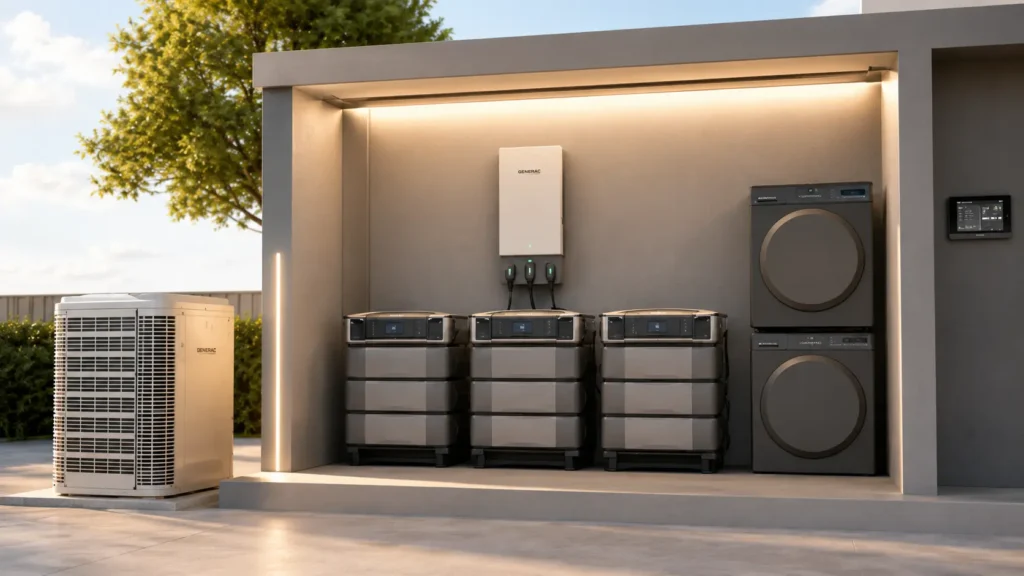
The EcoFlow DELTA Pro Ultra is our top pick among the best home backup power stations for homeowners who want a serious whole-home backup option.
It is designed for larger backup needs, especially when paired with EcoFlow’s smart home panel system. The base battery capacity is already strong, and the system can expand significantly for longer outages.
Why it ranks #1
The DELTA Pro Ultra stands out because it combines high output, strong capacity, solar charging, and home integration. For homeowners who want to power more than just a refrigerator and a few lights, it is one of the most complete options available.
It can support heavy household loads better than most portable power stations. That makes it a strong option for users who want a battery-based alternative to a traditional standby generator.
Best for
- Larger homes
- Whole-home backup planning
- Long outages
- Solar backup setups
- Homeowners who want smart panel integration
Pros
- Very strong AC output
- Expandable system
- Suitable for larger home backup needs
- Good solar integration
- Cleaner and quieter than gas generators
Cons
- Expensive
- Overkill for small homes
- Smart home integration may require professional setup
- Less portable than smaller power stations
Verdict
The EcoFlow DELTA Pro Ultra is one of the best home backup power stations if your priority is serious home backup capacity. It is not the cheapest option, but it offers one of the strongest combinations of output, expansion, and home integration.
Score: 9.5/10
2. Jackery Explorer 5000 Plus — Best Plug-and-Play Home Backup
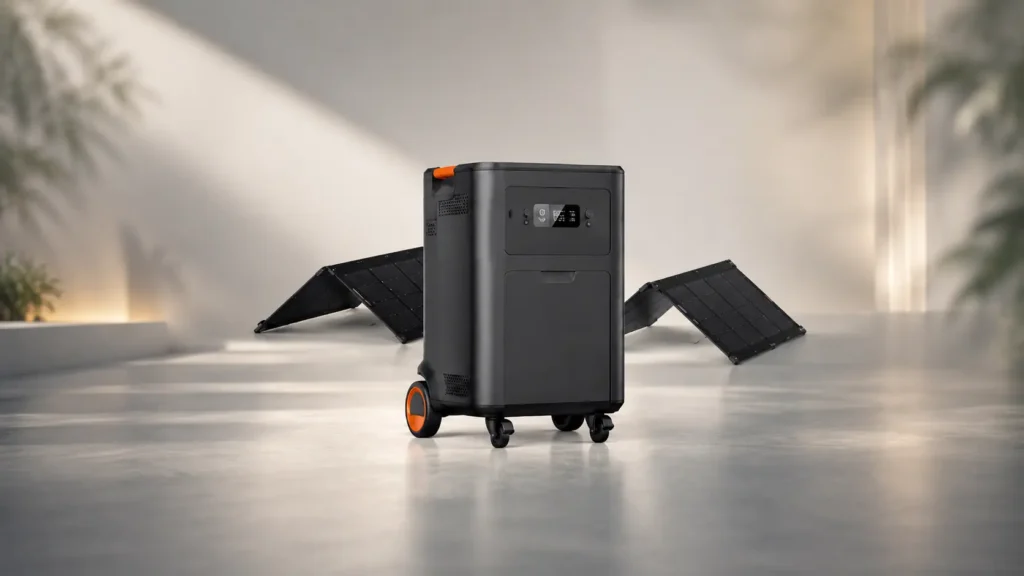
The Jackery Explorer 5000 Plus is one of the best home backup power stations for homeowners who want a powerful system without making the setup feel too technical.
Jackery has built its reputation around user-friendly portable power. The Explorer 5000 Plus continues that approach but pushes into much larger home backup territory.
Why it ranks #2
The Explorer 5000 Plus offers strong base capacity and high output for major appliances. It is especially appealing if you want a clean, battery-based backup system that feels easier to understand than some larger home battery setups.
For many homeowners, this is the key advantage: enough power for serious backup needs, but still positioned as a portable power station rather than a complicated installed system.
Best for
- Homeowners who want simplicity
- Backup for large appliances
- Emergency home power
- Solar generator setups
- Users who prefer a plug-and-play experience
Pros
- Strong home backup capacity
- High output potential
- Expandable system
- Easy-to-understand Jackery ecosystem
- Good option for emergency preparedness
Cons
- Expensive
- Heavy
- Expansion batteries add to cost
- May still require accessories for deeper home integration
Verdict
The Jackery Explorer 5000 Plus earns its place among the best home backup power stations because it balances power and simplicity well. It is a strong choice for homeowners who want serious backup power but do not want the most complex system.
Score: 9.2/10
3. Anker SOLIX F3800 — Best for RV and Home Backup
The Anker SOLIX F3800 is one of the best home backup power stations for people who want one system that can work for both home outages and RV use.
It has a strong 3,840Wh base capacity and a 6,000W AC output, which makes it much more capable than typical mid-size portable power stations.
Why it ranks #3
The SOLIX F3800 is powerful, expandable, and practical for users who need both 120V and 240V support. It also includes wheels, which matters because this is not a small unit.
For homeowners, the big appeal is flexibility. You can use it as an emergency backup battery, connect it with compatible home accessories, or take it on RV trips.
Best for
- RV owners
- Home backup users
- Large appliances
- Users who need 240V support
- People who want expandable storage
Pros
- Strong 6,000W output
- Expandable battery system
- Suitable for RV and home backup
- Wheels improve portability
- Good outlet selection
Cons
- Heavy
- Not ideal for small apartments
- Expansion adds cost
- May be more than basic users need
Verdict
The Anker SOLIX F3800 is one of the best home backup power stations if you want high output and flexibility. It is not the lightest system, but for home backup and RV power, it is a strong all-rounder.
Score: 9.0/10
4. BLUETTI Apex 300 — Best Expandable Modular System
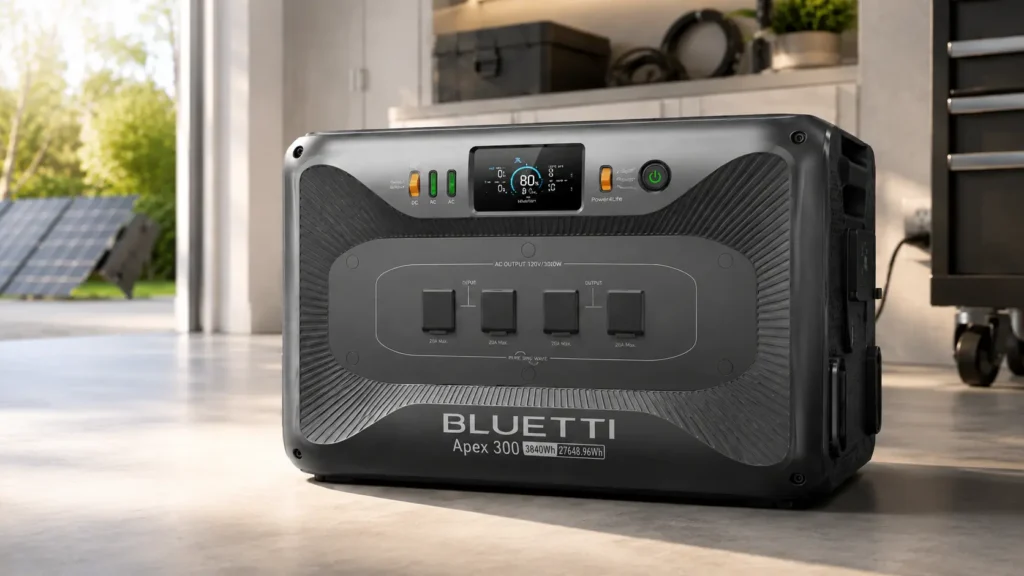
The BLUETTI Apex 300 is a strong option for buyers comparing the best home backup power stations with modular expansion in mind.
It starts with a 3,072Wh LFP battery and a 3,840W AC output. The major advantage is that it can expand into a much larger system with additional batteries.
Why it ranks #4
The Apex 300 is designed for users who may not need maximum capacity on day one but want room to grow. That makes it useful for home backup, off-grid cabins, RVs, and job sites.
It also supports both 120V and 240V loads, which makes it more flexible than many smaller power stations.
Best for
- Modular home backup
- Users who want expansion
- Off-grid cabins
- RVs
- Homeowners who may upgrade later
Pros
- Expandable battery system
- LFP battery chemistry
- Supports heavier backup use
- Good for multiple scenarios
- Lower starting point than some whole-home systems
Cons
- Base capacity is lower than the largest competitors’.
- Expansion batteries increase total cost
- Not as simple as smaller plug-and-play units
- May require planning for home integration
Verdict
The BLUETTI Apex 300 deserves a place among the best home backup power stations because it gives homeowners a scalable path. It is especially interesting if you want to start with a strong base unit and expand later.
Score: 8.8/10
5. Zendure SuperBase V6400 — Best High-Capacity Battery System
The Zendure SuperBase V6400 is one of the best home backup power stations for users who want a large battery capacity in a mobile system.
Its base capacity is higher than many competitors, and the system is designed to expand with satellite batteries. It is not a lightweight option, but it offers serious storage for longer outages.
Why it ranks #5
The SuperBase V6400 stands out because of its large battery capacity and semi-solid-state battery design. It can support both 120V and 240V output, which makes it more relevant for home backup than smaller portable batteries.
Its motorized wheels also help with movement, although the unit is still large and heavy.
Best for
- High-capacity backup
- Longer outages
- Off-grid use
- Users who want large battery storage
- Homeowners who prioritize capacity over portability
Pros
- Large base capacity
- Expandable system
- 120V and 240V support
- App monitoring
- Motorized wheels
Cons
- Expensive
- Heavy and bulky
- Fans can be noisy
- Not the simplest option for beginners
Verdict
The Zendure SuperBase V6400 is one of the best home backup power stations for users who want serious battery storage. It is less beginner-friendly than some competitors, but its capacity makes it attractive for extended backup needs.
Score: 8.6/10
Best Home Backup Power Stations Compared by Use Case
The best home backup power stations should be chosen by use case, not only by brand.
| Use Case | Best Pick | Why |
|---|---|---|
| Best overall home backup | EcoFlow DELTA Pro Ultra | Strong output, expansion, home integration |
| Best easy setup | Jackery Explorer 5000 Plus | Powerful but user-friendly |
| Best RV + home hybrid | Anker SOLIX F3800 | 120V/240V support and expandability |
| Best modular upgrade path | BLUETTI Apex 300 | Expandable system with flexible use |
| Best large battery capacity | Zendure SuperBase V6400 | High base capacity and expansion |
If you only need to power a refrigerator, router, lights, and phones, you may not need the largest system. But if you want backup for heavier home loads, the best home backup power stations in this ranking give you more room to operate during longer outages.
How to Choose the Best Home Backup Power Station
Before choosing one of the best home backup power stations, decide what you actually want to power.
A homeowner who only needs a fridge and a few devices has very different needs from someone who wants to support a sump pump, freezer, furnace blower, or selected home circuits.
1. Check battery capacity
Battery capacity is usually measured in watt-hours. The higher the number, the longer the unit can run appliances.
For example, a 3,000Wh unit can theoretically run a 300W load for about 10 hours. In real life, inverter losses and appliance surges reduce that number, but it still gives you a useful estimate.
2. Check AC output
Output determines what appliances the power station can run.
A high-capacity battery with low output may last a long time, but it may not power demanding appliances. For home backup, output matters as much as capacity.
3. Look for expandability
Expandable systems are useful if you want to start smaller and add batteries later.
This is one reason many of the best home backup power stations now support extra battery modules.
4. Consider solar charging
Solar input can help during longer outages, but only if you have enough panels and good sunlight.
A power station with strong solar input gives you more flexibility, but solar should be seen as part of a backup plan, not a guarantee.
5. Think about home integration
Some power stations can connect to smart panels, transfer switches, or home backup accessories.
If you want to power circuits instead of plugging in individual appliances, check compatibility before buying.
Common Mistakes to Avoid
Even the best home backup power stations can disappoint if you buy the wrong size or use them incorrectly.
Buying only by capacity
Capacity is important, but output matters too. A large battery is not useful if it cannot handle the appliances you need to run.
Ignoring startup surges
Refrigerators, pumps, and some appliances need extra power when they start. Check surge output before assuming a unit can handle your load.
Forgetting recharge time
A power station is only useful if you can recharge it. Look at AC charging speed, solar input, and whether expansion batteries affect charging time.
Choosing the biggest model automatically
Bigger is not always better. Larger systems cost more, weigh more, and may be harder to store.
Not planning your essential loads
Before buying, write down your essential appliances. This will make it easier to choose between the best home backup power stations without overspending.
FAQ: Best Home Backup Power Stations
What is the best home backup power station in 2026?
The best overall pick in this ranking is the EcoFlow DELTA Pro Ultra because it offers strong output, expandable capacity, solar compatibility, and home integration options.
Are power stations better than gas generators?
Power stations are quieter, cleaner, and safe for indoor battery use. Gas generators usually provide longer runtime if fuel is available, but they must be used outdoors because of carbon monoxide risk.
How many watt-hours do I need for home backup?
For basic essentials, 2,000–4,000Wh may be enough. For longer outages or more appliances, look at 5,000Wh or more. For whole-home backup planning, expandable systems are usually better.
Can a power station run a refrigerator?
Yes, many home backup power stations can run a refrigerator. Runtime depends on the refrigerator’s power draw, the battery capacity, and how often the compressor cycles.
Do home backup power stations need solar panels?
No. Most can charge from a wall outlet. Solar panels are useful for extended outages, but they are not required for basic emergency backup.
Are the best home backup power stations worth it?
The best home backup power stations are worth it if you want quiet, battery-based emergency power for outages. They are especially useful for refrigerators, internet, medical devices, lights, and selected appliances.
Final Verdict: Which Home Backup Power Station Should You Buy?
The best home backup power stations in 2026 serve different types of homeowners.
Choose the EcoFlow DELTA Pro Ultra if you want the strongest whole-home backup option. Choose the Jackery Explorer 5000 Plus if you want serious power with a simpler plug-and-play experience. Choose the Anker SOLIX F3800 if you want a flexible system for both home backup and RV use.
The BLUETTI Apex 300 is best if you want modular expansion, while the Zendure SuperBase V6400 is best if your priority is large battery capacity.
For most homeowners, the safest buying process is simple:
- List your essential appliances.
- Estimate your wattage and runtime needs.
- Decide whether you need 120V only or 120V/240V support.
- Check expansion options.
- Compare the best home backup power stations based on real outage needs, not just headline specs.
If you want quiet emergency power without gas fumes, one of these battery systems can be a smart investment before the next outage.
Pros & Cons
- Strong ranking of five high-capacity home backup power stations
- Clear comparison by capacity, output, use case, and score
- Helpful recommendations for different homeowner profiles
- Good focus on expandability for longer outages
- Includes practical buying criteria such as solar input, 120V/240V support, and home integration
- Covers both premium whole-home systems and more modular options
- Useful FAQ section for buyers still comparing battery backup vs gas generators
- Some systems may be too expensive for basic emergency backup
- Large power stations can be heavy and less portable
- Whole-home integration may require extra accessories or professional setup
- Solar charging depends on panel size, sunlight, and weather conditions
- Prices, bundles, and availability can change frequently
- Buyers with very small backup needs may not need such powerful systems

Selena Garcia
Content EditorSelena Garcia is an independent writer and researcher at OffGridVolt. She covers portable power stations, home backup solutions, solar generators, and off-grid energy products. Her work focuses on comparing product specifications, features, pricing, and practical use cases to help readers make better-informed purchasing decisions. When electrical installation or safety is involved, she encourages readers to consult a qualified professional.
This article contains affiliate links. If you buy through our links, we may earn a small commission — at no extra cost to you. We only recommend products we've genuinely tested and trust.