
The best solar generator is the one that matches your actual power needs, not necessarily the most expensive model. Focus on battery capacity (Wh), AC output, LiFePO4 battery technology, solar charging capability, portability, warranty, and ecosystem support. By comparing these key criteria, you can choose a reliable solar generator that delivers long-term performance, value, and energy independence.
How to Choose a Solar Generator: Hundreds of models. Dozens of specs. And no shortage of marketing claims. If picking a solar generator feels overwhelming, that is because most buying guides skip the fundamentals and go straight to product lists.
Learning how to choose a solar generator starts with understanding your actual power needs. This guide works differently. We walk you through every technical criterion that actually matters, in the order you should evaluate it, with real numbers and concrete scenarios. Whether you are heading into the backcountry, outfitting a van, or protecting your home from outages, the right answer depends on your load, not on the loudest brand.
By the end of this guide, you will know exactly how to choose a solar generator based on battery capacity, inverter output, charging speed, portability, and long-term reliability.
What Exactly Is a Solar Generator?
Components: Power Station + Solar Panels
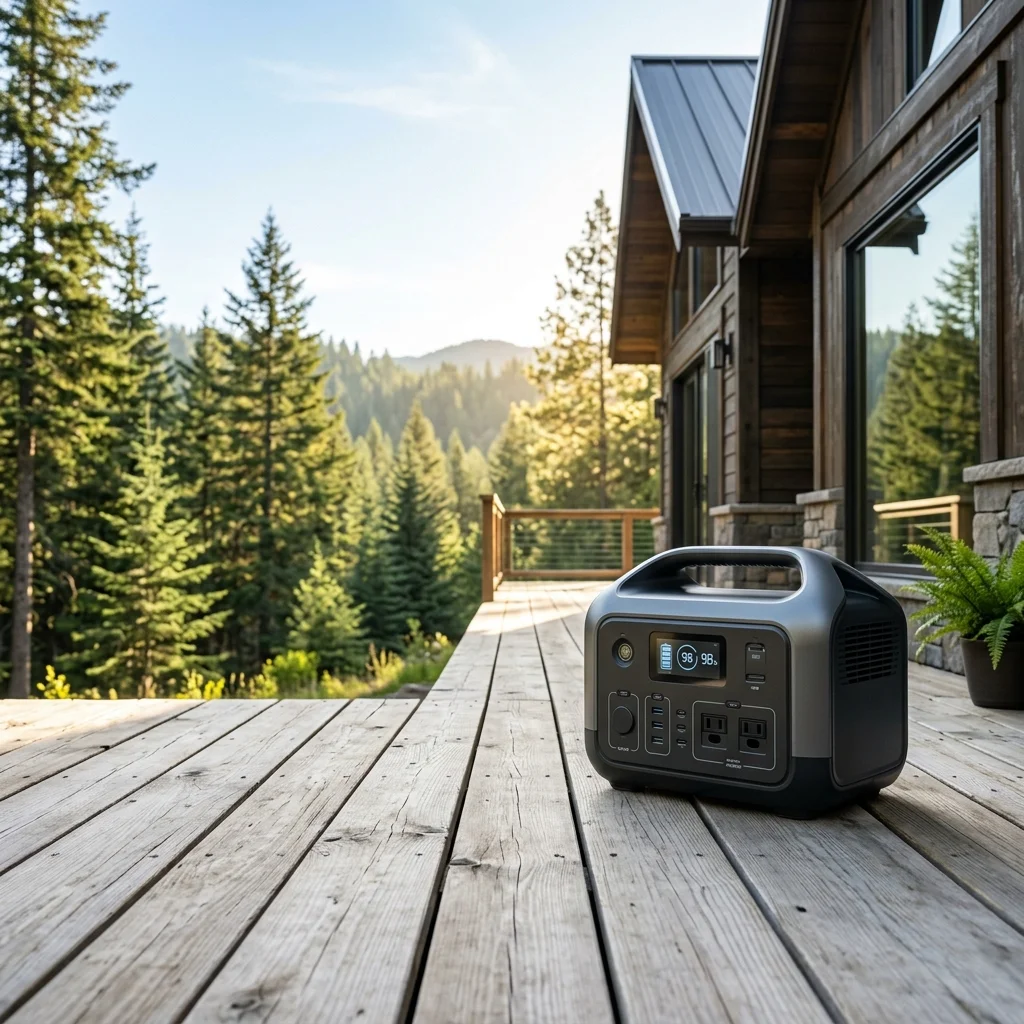
A solar generator is not a single device. It is a system made of two parts: a portable power station (the battery, inverter, and charging electronics) and one or more solar panels. Together they form a self-contained energy loop.
How It Works
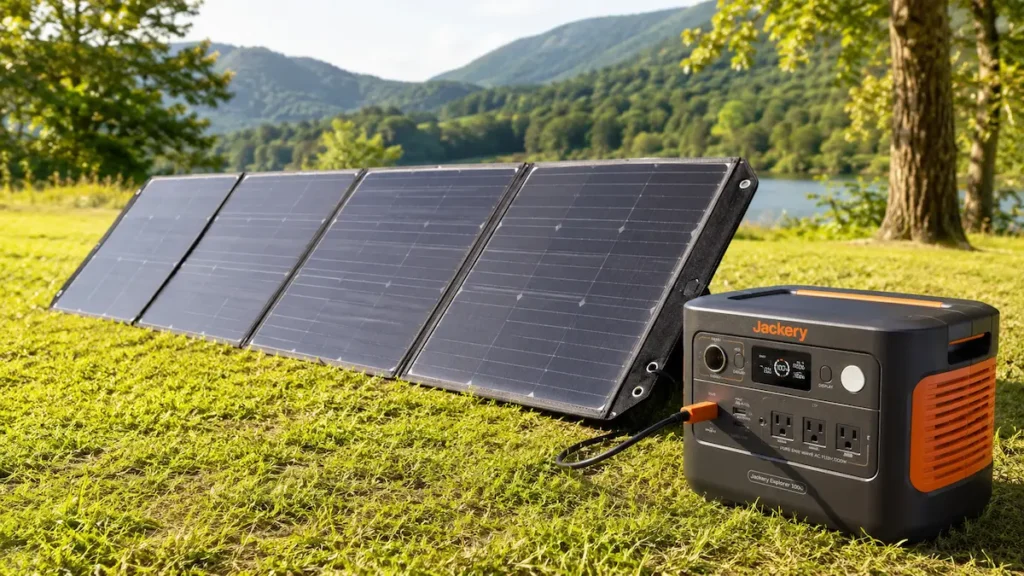
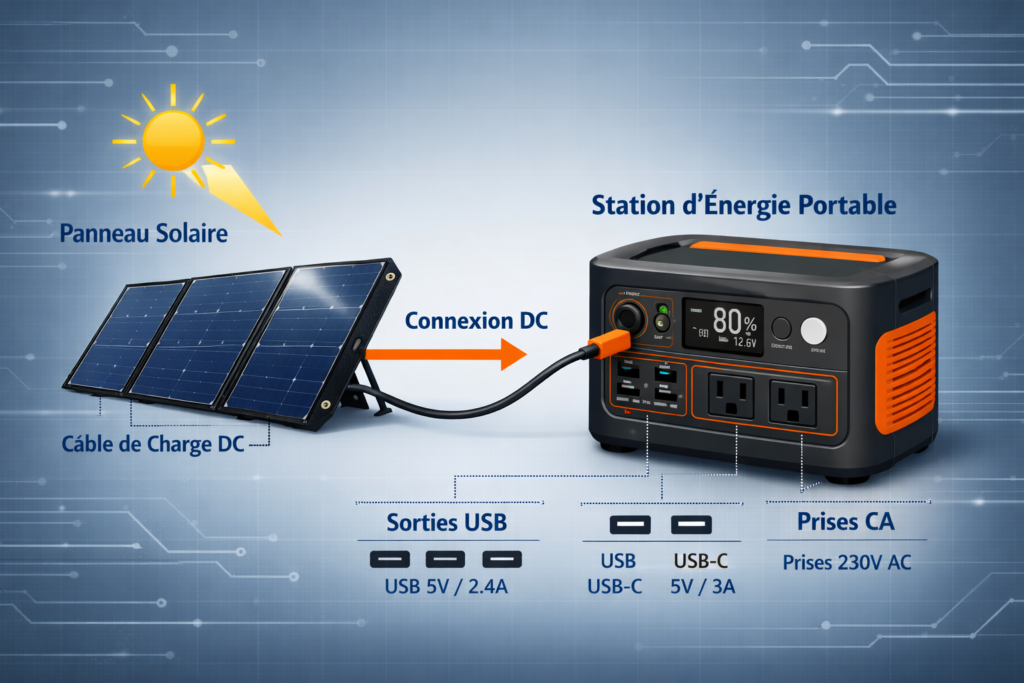
Solar panels convert sunlight into DC electricity. The power station’s MPPT (Maximum Power Point Tracking) controller optimizes that input and charges the internal battery. The inverter then converts stored DC power into 120V AC for standard appliances, while DC ports handle 12V devices and USB loads.
The key point: the solar panels and the power station must be electrically compatible. Max solar input (in watts) and voltage window are printed in the specs. Mismatched panels either charge slowly or do not work at all.
Solar Generator vs Gas Generator
The case for solar is real, but it comes with trade-offs. A solar generator is silent, fume-free, and has near-zero running cost. A gas generator outputs more raw power and refuels in minutes. For a detailed comparison, see our guide on solar vs gas generators.
Step 1: How to Choose a Solar Generator Based on Your Real Power Needs
Understanding Watt-Hours (Wh)
Watt-hours measure energy, not power. A 100W device running for 10 hours consumes 1,000 Wh. A 1,000 Wh battery can sustain that device for roughly 8 to 9 hours once you factor in inverter efficiency losses (typically 85 to 90%).
Capacity is the single most important spec to get right. Too small and you run out of power mid-trip. Too large and you are carrying unnecessary weight and cost.
Formula: How Much Capacity You Need
Required Wh = Device Watts × Hours of Use ÷ 0.85 (efficiency factor)
Example Scenarios
CPAP (no humidifier, ~30W): 30 × 8 ÷ 0.85 = ~283 Wh per night. A 300 Wh unit works for one night; a 600 Wh unit covers two nights with margin.
Laptop (65W) + mirrorless camera (20W): 85 × 6 ÷ 0.85 = ~600 Wh per full workday.
12V mini-fridge (~45W average): 45 × 24 ÷ 0.85 = ~1,270 Wh per day. You need at least a 1,000 Wh unit and consistent solar input.
Circular saw (1,500W peak, used 1 hour total): 1,500 × 1 ÷ 0.85 = ~1,765 Wh. The inverter surge capacity matters more here than total Wh.
Router (10W) + LED lights (30W) during a power outage, 8 hours: 40 × 8 ÷ 0.85 = ~377 Wh.
Step 2: How to Choose a Solar Generator Based on AC Output
Continuous vs Surge Power
Continuous output is what the inverter sustains indefinitely. Surge (or peak) output is the short burst it handles when a motor or compressor starts. A fridge compressor starting can pull 3× its running watts for half a second.
Always check both. An inverter rated at 1,000W continuous and 2,000W surge handles most camper appliances. One rated at 1,000W continuous with no stated surge spec is a risk.

What You Can Run With Different Inverter Sizes
- 300W: Phone chargers, laptop, LED lights, CPAP (no humidifier), small fan
- 1,000W: Mini-fridge, TV, drone charger, power tools under 800W running draw
- 2,000W: Full-size blender, circular saw (check surge), small window AC, e-bike charger
- 3,000W+: Coffee maker + fridge simultaneously, air compressor, skill saw + loads
Pure Sine Wave Importance
Most quality solar generators ship with pure sine wave inverters. Modified sine wave units are cheaper but cause problems with sensitive electronics, including CPAP machines, medical devices, and some laptop chargers. If it is not clearly labeled pure sine wave, assume it is not.
Step 3: Battery Type — LiFePO4 vs NMC
Cycle Life Comparison
Lithium Iron Phosphate (LiFePO4) delivers 2,000 to 4,000+ charge cycles to 80% capacity. Nickel Manganese Cobalt (NMC) typically offers 500 to 1,000 cycles. For a unit you plan to use weekly, that difference translates to 5 to 10 years versus 1 to 3 years of useful life.
Safety, Weight, Temperature Performance
LiFePO4 chemistry is thermally stable. It does not enter thermal runaway under abuse conditions the way NMC can. NMC cells are more energy-dense, so a same-capacity NMC unit weighs less. In very cold weather (below 14°F / -10°C), both chemistries lose capacity, but LiFePO4 degrades more gracefully.
Which Battery Type You Should Choose
- Choose LiFePO4 if: you want long-term reliability, plan heavy use, or need home backup.
- Choose NMC if: portability and weight are your top priority and cycle count is secondary.
Most units on the market in 2026 are LiFePO4. NMC is increasingly rare in this product category.
Step 4: Solar Input and Charging Speed
MPPT Controller
A good MPPT controller extracts 10 to 30% more energy from the same panels compared to basic PWM controllers. Every reputable portable power station uses MPPT. Check the max solar input wattage and the acceptable voltage window for your panels.
Max Solar Input (W)
A 1,000 Wh battery with a 400W solar input can theoretically recharge in 2.5 to 3 hours of peak sun. Halve the solar input and you double the time. In cloudy conditions, divide output by 3 to 4.
Real-world rule: assume 4 peak sun hours per day in most US/EU locations. A 1,000 Wh battery needs 250W of solar minimum to recover daily consumption in 4 hours.
Realistic Solar Charging Times
- 500 Wh battery, 200W panel: ~3 hours in full sun
- 1,000 Wh battery, 200W panel: ~6 hours in full sun
- 2,000 Wh battery, 400W panels: ~6 to 7 hours in full sun
- 2,000 Wh battery, 800W panels: ~3 hours in full sun
AC + Solar Dual Charging
Most modern power stations support simultaneous AC wall charging and solar input. Some support “turbo” modes that combine both for faster fill times. This is especially useful in a van or cabin where you have partial grid access.
Step 5: Portability and Build Quality
Weight vs Capacity
There is no such thing as a heavy power station that is genuinely portable for long hikes. LiFePO4 units run about 1 lb per 100 Wh as a rough baseline. A 1,000 Wh unit typically weighs 22 to 30 lbs. A 2,000 Wh unit is 40 to 50 lbs — manageable with wheels, challenging without.
Handles, Wheels, Outdoor Durability
For anything over 30 lbs, wheels and a telescoping handle are not a luxury. Check the materials too. Polycarbonate housings handle drops better than cheap ABS. IP ratings for dust and water resistance exist on a handful of units — relevant if you camp in rain or work on dusty sites.
Fan Noise
All solar generators have thermal management fans. At light loads they rarely spin. At 50%+ inverter load, fans on some units reach 45 to 55 dB — noticeable in a tent. If quiet operation matters (sleeping, recording audio), check third-party noise measurements before buying.
Step 6: Smart Features and Safety
App Control
Bluetooth or Wi-Fi app control lets you monitor SOC (state of charge), set charge limits, adjust output, and see real-time power draw. This is genuinely useful for long trips and home backup. Jackery and EcoFlow both have solid app ecosystems.
UPS Mode
UPS (Uninterruptible Power Supply) mode keeps the unit plugged into shore power and switches to battery in under 30ms when the grid drops. Essential for home backup protecting computers, modems, or medical equipment.
Overload and Overheat Protection
Reliable units cut power automatically if the inverter is overloaded or the battery temperature goes out of range. This is standard, but quality of implementation varies. Cheaper units shut down hard and require a restart cycle. Better units throttle output and recover automatically.
Comparison Table: Which Solar Generator Fits Your Use Case
| Model | Capacity (Wh) | AC Output (W) | Battery | Best For |
| Jackery Explorer 300 Plus | 288 Wh | 300 W | LiFePO4 | Camping, CPAP, day hikes |
| Jackery Solar Gen. 1000 Plus | 1,264 Wh | 2,000 W | LiFePO4 | Weekend camping, van life |
| Jackery Solar Gen. 2000 Plus | 2,042 Wh | 3,000 W | LiFePO4 | Van life, home backup |
| EcoFlow DELTA 3 Ultra | 1,024–6,144 Wh | 3,600 W | LiFePO4 | Home backup, worksites |
| EcoFlow DELTA 2 | 1,024 Wh | 1,800 W | LiFePO4 | Camping, small home backup |
| Bluetti AC200L | 2,048 Wh | 2,400 W | LiFePO4 | Home backup, RV |
For a full ranked list, see best solar generators in 2026.
Mistakes to Avoid When Choosing a Solar Generator
- Buying on price alone. A 500 Wh NMC unit at $400 may last 600 cycles. A 500 Wh LiFePO4 unit at $550 lasts 3,000 cycles. The math favors the more expensive one.
- Ignoring the max solar input spec. A 2,000 Wh battery with only 200W solar input takes 12+ hours to charge. That is not viable for daily van life use.
- Underestimating Wh needs. People consistently undercount. Add a 20% buffer to your calculation.
- Choosing NMC for home backup. Cycling a battery daily for backup means cycle count matters. LiFePO4 is the clear choice for this use case.
- Buying a kit with incompatible panels. Some bundled panels exceed the power station’s voltage window. Always cross-check the specs before adding third-party panels.
Best Solar Generator by Scenario
Camping and Lightweight Use
For weekend camping with basic electronics (phone, laptop, lights, CPAP), a 300 to 600 Wh unit with a 200W panel is sufficient. Weight is the dominant constraint here. Target units under 15 lbs for backpacking or car camping setups.
Van Life and Overlanding
Van life demands consistent daily energy. A 1,500 to 2,000 Wh unit with 400 to 800W of solar covers most builds running a fridge, laptop, lighting, and phone charging. See our best power stations for van life for curated picks.
Home Backup Power
Home backup needs depend on what you protect. A 2,000 Wh unit with UPS mode handles essentials: router, lights, phone charging, and small medical devices for 8 to 16 hours. For whole-home backup including the fridge, plan for 5,000+ Wh or an expandable system.
High-Demand Tools and Worksites
Contractors and serious DIYers need high continuous AC output and fast recharge. Look for 2,000W+ inverters with verified surge capacity. Battery capacity matters less than raw output for short tool bursts. A 2,000 Wh unit at 3,000W continuous beats a 3,000 Wh unit at 1,500W for worksite use.
Recommended Models (With Internal Links)
Jackery Solar Generator 2000 Plus
Capacity: 2,042 Wh. Inverter: 3,000W continuous, 6,000W surge. Battery: LiFePO4, rated 4,000 cycles. Max solar input: 2,000W. Weight: 66 lbs. One of the most capable dual-purpose units for van life and home backup.
Weaknesses: heavier than competitors at this capacity; app Bluetooth connectivity can be intermittent.
Read full Jackery 2000 Plus review for our performance analysis. Or check current best deals on the Jackery 2000 Plus.
EcoFlow DELTA 3 Ultra
Capacity: 1,024 Wh base, expandable to 6,144 Wh with add-on batteries. Inverter: 3,600W continuous, 7,200W surge. Battery: LiFePO4. Max solar input: 2,600W. The most scalable option on the market for home backup. UPS mode switches in under 30ms.
Weaknesses: base unit is expensive at 1,024 Wh; full expansion cost is significant.
Find EcoFlow DELTA 3 Ultra deals and current pricing in our dedicated guide.
Final Checklist Before Buying
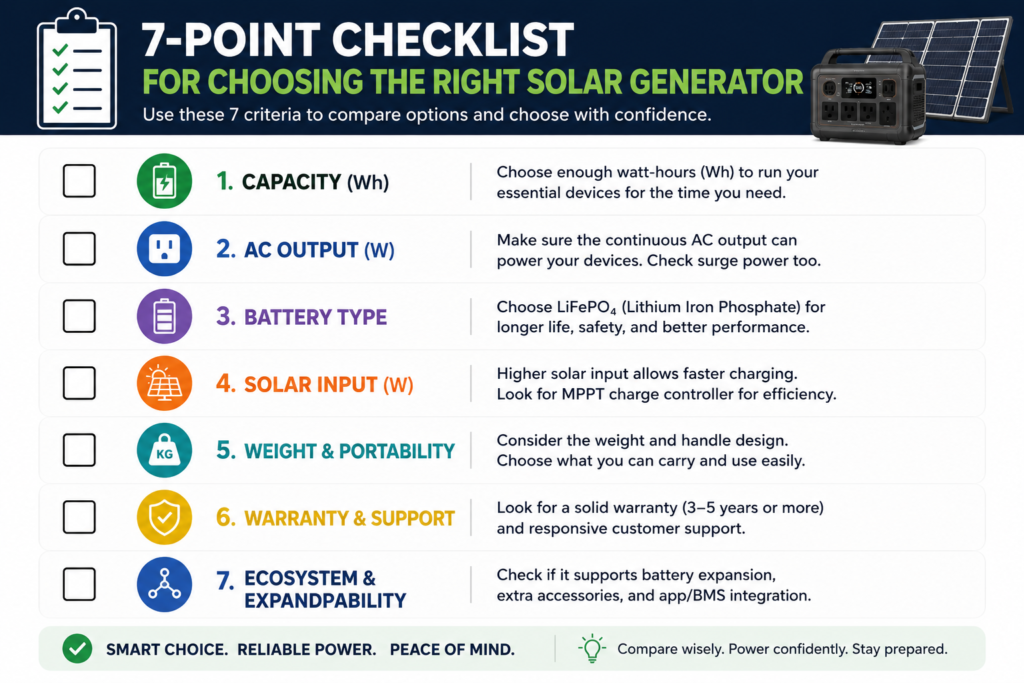
- Wh capacity: does it cover your daily load calculation with a 20% buffer?
- AC continuous output: can it handle your highest-draw appliance without tripping?
- Surge rating: does it cover motor-start peaks from your fridge, saw, or pump?
- Battery type: LiFePO4 for long-term use, NMC only if weight is the overriding factor.
- Max solar input: enough to recharge in 4 to 5 peak sun hours?
- Panel compatibility: voltage window matches your panels, or the bundled panels are included.
- Weight and form factor: can you realistically move it to where you need it?
- Warranty: 2 years minimum from a brand with domestic support.
- Ecosystem: does the brand offer compatible expansion batteries, panels, and accessories?
Choosing a solar generator comes down to one honest calculation: your real power needs, matched to a unit that can deliver them reliably over years of use. Start with your load in watt-hours. Then verify the inverter can handle your peak draws. Pick LiFePO4 unless weight forces otherwise. Check the solar input against your recharge window.
If you want curated recommendations by budget and use case, our best solar generators in 2026 guide does the shortlisting for you.
Pros & Cons
- Helps you accurately calculate your power needs
- Explains battery types and inverter ratings clearly
- Covers real-world use cases and buying scenarios
- Highlights common mistakes to avoid
- Suitable for camping, van life, home backup, and worksites
- echnical specifications can feel overwhelming for beginners
- Higher-capacity systems require a larger budget
- Solar charging performance depends on weather conditions
- Large units may be difficult to transport
- Not all bundled solar panels are compatible with every power station

Eleanor Parker
Content EditorEleanor Parker is a renewable energy writer specializing in solar generators, portable power stations, battery technology, and off-grid energy solutions. She creates comprehensive buying guides, detailed product reviews, and educational content to help consumers understand, compare, and choose reliable portable power systems. Her work focuses on providing accurate, unbiased, and practical information for homeowners, campers, travelers, and off-grid enthusiasts.